In the recent years, A2 ghee has become one of the most searched traditional superfoods in India. From health-conscious families to Ayurveda followers, more people are switching from regular ghee to A2 ghee. But what exactly is A2 ghee? Why is it more expensive? And is it really better than normal ghee?
In this comprehensive pillar guide, we will cover you with everything you need to know about ghee — its meaning, science, benefits, preparation method, differences, and how to choose the best one.
What Is A2 Ghee?
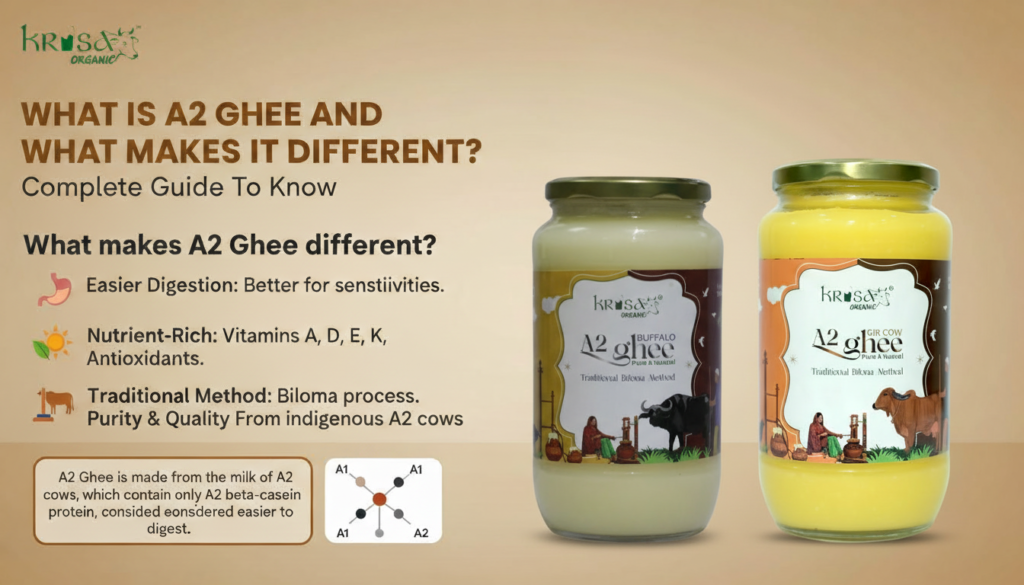
A2 ghee is the clarified butter made from the milk of indigenous cows that produce A2 beta-casein protein. Unlike other regular milk that may contain A1 protein, A2 milk contains only A2 beta-casein, which many believe is easier to digest.
A2 desi ghee is usually prepared by using the traditional Bilona method, a slow and natural process that preserves nutrients, aroma, and texture.
In simple words:
- A2 desi ghee = Ghee made from A2 cow milk
- Regular ghee = Ghee made from mixed or A1 milk
The difference lies in the protein structure and preparation method.
Understanding A1 and A2 Milk: The Core Difference
Milk contains multiple nutrients, including fats, vitamins, minerals, and proteins. One major protein in milk is beta-casein, which exists in two primary forms:
- A1 Beta-Casein
- A2 Beta-Casein
What Happens During Digestion?
When A1 protein is digested, it may release a peptide called BCM-7 (Beta-Casomorphin-7). Some of the studies suggest BCM-7 may cause the digestive discomfort in certain individuals.
A2 protein does not release the BCM-7 in the same way, which is why some people report:
- Less bloating
- Better digestion
- Reduced heaviness
While research is still ongoing, many consumers prefer A2 products for perceived digestive comfort.
Indigenous Cows That Produce A2 Milk
In India, several native cow breeds naturally produce A2 milk:
- Gir
- Sahiwal
- Tharparkar
- Red Sindhi
- Rathi
These breeds are traditionally raised and are known for their resilience and quality milk production.
Crossbred and foreign breeds may produce A1 or mixed milk, which is commonly used in commercial dairy production.
How Is A2 Ghee Made? (Traditional Bilona Method)
Authentic A2 desi ghee is made using the ancient Bilona process. This method is labor-intensive but preserves maximum nutrition.
Step-by-Step Process:
- Fresh A2 cow milk is boiled.
- The milk is cooled and turned into curd naturally.
- The curd is churned using a wooden churner (Bilona) to extract butter.
- The butter is slowly heated on a low flame.
- Pure golden ghee is separated and collected.
Why This Method Matters
Unlike industrial cream-based methods, Bilona:
- Maintains natural aroma
- Retains fat-soluble vitamins
- Enhances nutrient density
- Produces grainy texture
The slow cooking ensures that the nutrients are not destroyed by the high heat processing.
A2 Ghee vs Regular Ghee – Detailed Comparison
| Feature | A2 Ghee | Regular Ghee |
|---|---|---|
| Milk Source | Indigenous cows | Crossbred or mixed cows |
| Protein Type | A2 beta-casein | Often A1 or mixed |
| Preparation Method | Bilona (curd-based) | Cream-based industrial |
| Digestibility | Easier for many people | May cause heaviness for some |
| Nutrient Retention | Higher in traditional method | Depends on processing |
| Texture | Thick, grainy | Smooth or uniform |
| Aroma | Strong, traditional | Mild or neutral |
| Price | Premium | More affordable |
| Availability | Limited batches | Mass-produced |
Nutritional Profile of A2 Ghee
It is rich in:
- Healthy saturated fats
- Omega fatty acids
- Conjugated Linoleic Acid (CLA)
- Butyric acid
- Vitamins A, D, E, K
Why These Nutrients Matter
Butyric Acid – Supports gut health and colon function
CLA – Associated with metabolic benefits
Vitamin A – Supports vision and immunity
Vitamin D – Essential for bone health
Because ghee removes milk solids, it contains negligible lactose and casein traces.
Health Benefits of A2 Ghee
While moderation is the key, A2 desi ghee is traditionally associated with several benefits:
1. Supports Digestion
Ayurveda considers the ghee as a digestive enhancer. It may:
- Stimulate digestive fire (Agni)
- Improve nutrient absorption
- Reduce dryness in the gut
2. High Smoke Point
A2 desi ghee has a high smoke point (around 250°C), making it stable for:
- Frying
- Sautéing
- Indian tadka
It does not easily break down into the harmful compounds.
3. Supports Immunity
It has Fat-soluble vitamins and antioxidants may contribute to immune health.
4. Energy Booster
It has Healthy fats provide sustained energy without sudden spikes.
5. Skin & Hair Nourishment
Traditionally used for:
- Dry skin
- Hair nourishment
- Baby massage
Is A2 Ghee Good for Weight Management?
On Contrary to myths, the moderate consumption of healthy fats can support the metabolism.
A2 desi ghee:
- Contains medium-chain of fatty acids
- May promote satiety
- Reduces cravings when used properly
However, portion control is important.
Is A2 Ghee Lactose-Free?
Ghee is clarified butter, meaning milk solids are removed during heating. Therefore:
- It contains negligible lactose
- Most lactose-intolerant individuals tolerate ghee
However, those with severe dairy allergies should consult a doctor.
Why Is A2 Ghee Expensive?
The higher price of A2 desi ghee is due to:
- Indigenous cows produce less milk
- Ethical, small-scale farming
- Labor-intensive Bilona method
- Longer preparation time
- Limited production
The cost reflects quality sourcing and traditional preparation.
How to Identify Pure A2 Ghee?
Here are some indicators:
- Grainy texture after solidifying
- Golden yellow color
- Rich, nutty aroma
- Transparent sourcing information
- Made from curd, not cream
Avoid products with:
- Artificial coloring
- Added flavors
- Extremely low pricing
Lab testing remains the most reliable verification method.
Common Myths About A2 Ghee
Myth 1: A2 Ghee Has No Fat
False. It contains healthy fats like all ghee.
Myth 2: It Is a Medicine
A2 desi ghee is a nutritious food, not a cure for diseases.
Myth 3: All Expensive Ghee Is A2
Not necessarily. Always check the source and preparation method.
How to Use A2 Ghee Daily
You can include A2 desi ghee in:
- Warm dal and rice
- Rotis and parathas
- Morning coffee or milk
- Cooking vegetables
- Homemade sweets
Recommended intake: 1–2 teaspoons per day (depending on diet and lifestyle).
Who Should Choose A2 Ghee?
A2 desi ghee may be preferred by:
- Health-conscious individuals
- Ayurveda followers
- Families seeking traditional nutrition
- Those experiencing discomfort with regular dairy
Is A2 Ghee Scientifically Proven?
Research on A2 milk and digestion is ongoing. While some studies suggest digestive benefits, more long-term research is needed.
However, traditional Indian dietary practices have used indigenous cow ghee for centuries.
Final Thoughts
A2 ghee is not just a trend — it represents a return to traditional dairy practices. The key differences lie in:
- The protein structure (A2 beta-casein)
- The indigenous cow source
- The Bilona preparation method
- Nutritional retention
While both regular and A2 desi ghee provide healthy fats, many consumers choose A2 ghee for authenticity, digestibility, and traditional value.
Quality matters more than labels. Always choose trusted sources that maintain transparency in sourcing and preparation.
FAQs
1. What is A2 ghee?
A2 ghee is clarified butter made from the milk of indigenous cows that produce A2 beta-casein protein.
2. What makes A2 ghee different from regular ghee?
The difference lies in the protein type (A2 vs A1) and the traditional Bilona preparation method.
3. Is A2 ghee healthier?
It contains similar fats as regular ghee, but some people find it easier to digest.
4. Can I consume A2 ghee daily?
Yes, in moderation — typically 1–2 teaspoons per day.
5. Why is A2 ghee costly?
It involves indigenous cows, low milk yield, and traditional labor-intensive preparation.
6. Is A2 ghee lactose-free?
Ghee contains negligible lactose since milk solids are removed.